


Baseline 16
Regular price
$149.00
A long face and a long handle, for players who reset as often as they drive.
- Ships in 48 hours
- 2-year warranty
- Free shipping $50+
- 30-day play test
Compatible with
Ships together
Neoprene Paddle Cover
From $16.00

Outdoor Balls
From $14.00

Portable Net
From $39.00
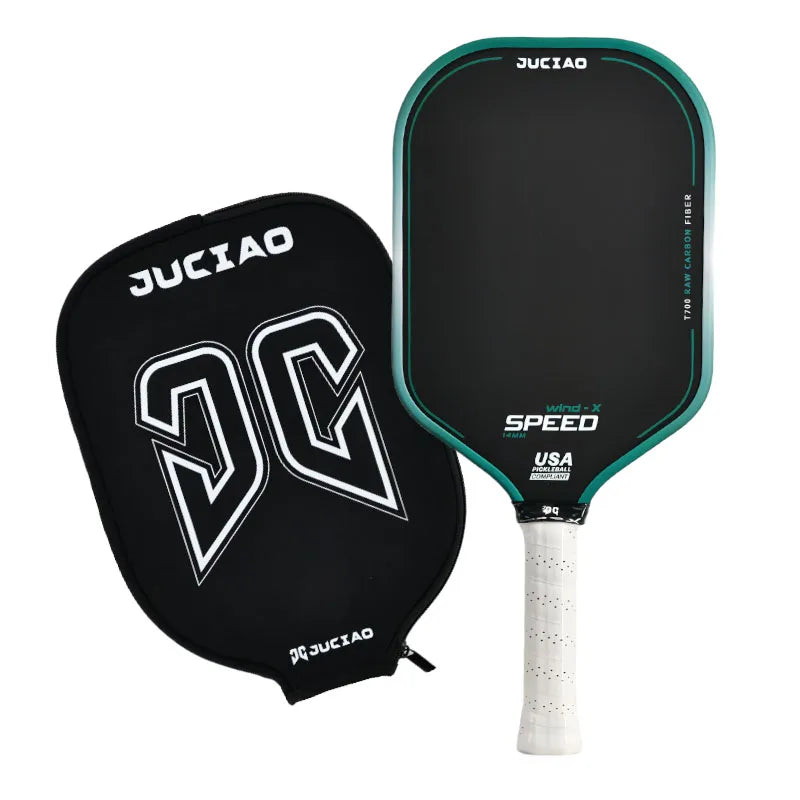
| Shape | Elongated — 16.5 in × 7.5 in |
|---|---|
| Core thickness | 14 mm |
| Face material | Raw carbon fiber |
| Core material | Polypropylene honeycomb |
| Average weight | 8.1 oz ± 0.2 |
| Handle length | 5.7 in |
| Grip circumference | 4.13 in |
| In the box | 1 paddle · 1 paddle cover |
About this paddle
Who it's for
The Baseline 16 is built for the intermediate all-court player — the one who resets as often as they drive, and wants one paddle for both. If you play a two-handed backhand, or you have been fighting a grip that feels too fat in your hand, this is the shape and the handle that fit. Singles or doubles, the game stays yours.
How it plays
Contact is quiet and long. The 16 mm polypropylene honeycomb core lets the ball sit on the face for an extra beat, which is what turns a third-shot drop into a drop instead of a pop-up. Drive through it and the pace is there, but it arrives after the ball has settled.
On an elongated face the strike zone sits high, toward the tip. Find it once and your hands remember it.
The core
Core: 16 mm of polypropylene honeycomb. The deeper the cell, the more it absorbs before it returns the ball — and 16 mm is the touch end of that trade. Softer hands at the kitchen line, resets that stay down, and a drive that still carries weight.
The same paddle is built in 14 mm if you want a firmer, faster answer.
The face
Face: raw carbon fiber, left unpainted. Paint fills the weave and dulls the bite; raw carbon keeps the grain open, so the ball grabs and leaves with spin instead of sliding off. Roll volleys, topspin dinks and heavy serves all live on that texture. Over a season it polishes where you hit most.
Shape and reach
16.5 in long, 7.5 in wide: elongated. The length buys reach at the sideline and leverage on the serve, and the narrower face rewards a clean contact point. Under it sits a 5.7 in handle — long enough that a two-handed backhand gets a real second hand instead of a pinch. Long face, long handle: they work together.
Weight and balance
Weight: 8.1 oz ± 0.2 — the tolerance is part of the spec, not a footnote. A true midweight: light enough to lift for a speed-up at the net, with enough behind it to drive from the baseline. And the 5.7 in handle carries more of the paddle's mass behind your hand, where you can feel it.
In the box
Two items ship together:
- 1 paddle — the Baseline 16, in the core thickness you chose
- 1 paddle cover — cut for a 16.5 in frame, so it slides on without a fight
Nothing to assemble. Take it out and warm up.
Care and lifespan
Raw carbon collects ball residue — that gray film is dust and rubber, not wear. Wipe the face with a damp microfiber cloth after play and the texture comes back. Skip solvents; they close the weave.
The edge guard takes the scrapes so the face does not. Keep the paddle in its cover between sessions rather than loose in a trunk.
Questions about this paddle
Should I take the 16 mm or the 14 mm?
Take 16 mm if your game runs through the kitchen line: the deeper core holds the ball a beat longer, which makes drops and resets easier to land. Take 14 mm if you want a firmer, faster response off the face. Same face, same handle — only the core changes.
Is a 4.13 in grip too small for my hand?
A 4.13 in grip suits small and medium hands, and it is the size to start from either way: you can add circumference with an overgrip, but you cannot take it away. A slimmer handle also lets the wrist move more freely, which is where topspin on a roll volley comes from.
Is the handle long enough for a two-handed backhand?
Yes. The handle is 5.7 in, which leaves room for a second hand without your top hand riding up onto the face. If you came to pickleball from tennis, this is the handle length that will feel familiar.
Why does the face look dirty after a few sessions?
That gray film is rubber transferred from the ball plus court dust sitting in the open weave. It is not wear. A damp microfiber cloth after each session takes it off and brings the texture back. Skip solvents and abrasive pads — they smooth the grain that makes the spin.
What comes in the box?
One paddle and one paddle cover. The cover is cut for a 16.5 in elongated frame, so it fits without stretching. Nothing to assemble — take the paddle out and warm up.
How long will it last?
That is decided by storage more than by swings. The edge guard is the part that meets the court, so check it after scrapes. Wipe the face after each session, keep the paddle in its cover instead of loose in a bag, and keep it out of a hot trunk.
Paddles that play near this one
View all